Hands-on review
I Tried the Beeswax Salve Everyone’s Talking About on My Most Scratched-Up Timber — Here’s What Actually Happened
I’d left glasses on tables without a coaster for so long, left a white circle I couldn’t stop noticing, and quietly panicked about a refinishing quote. Before spending thousands, I tried a $37 tin. This is the honest run-through.
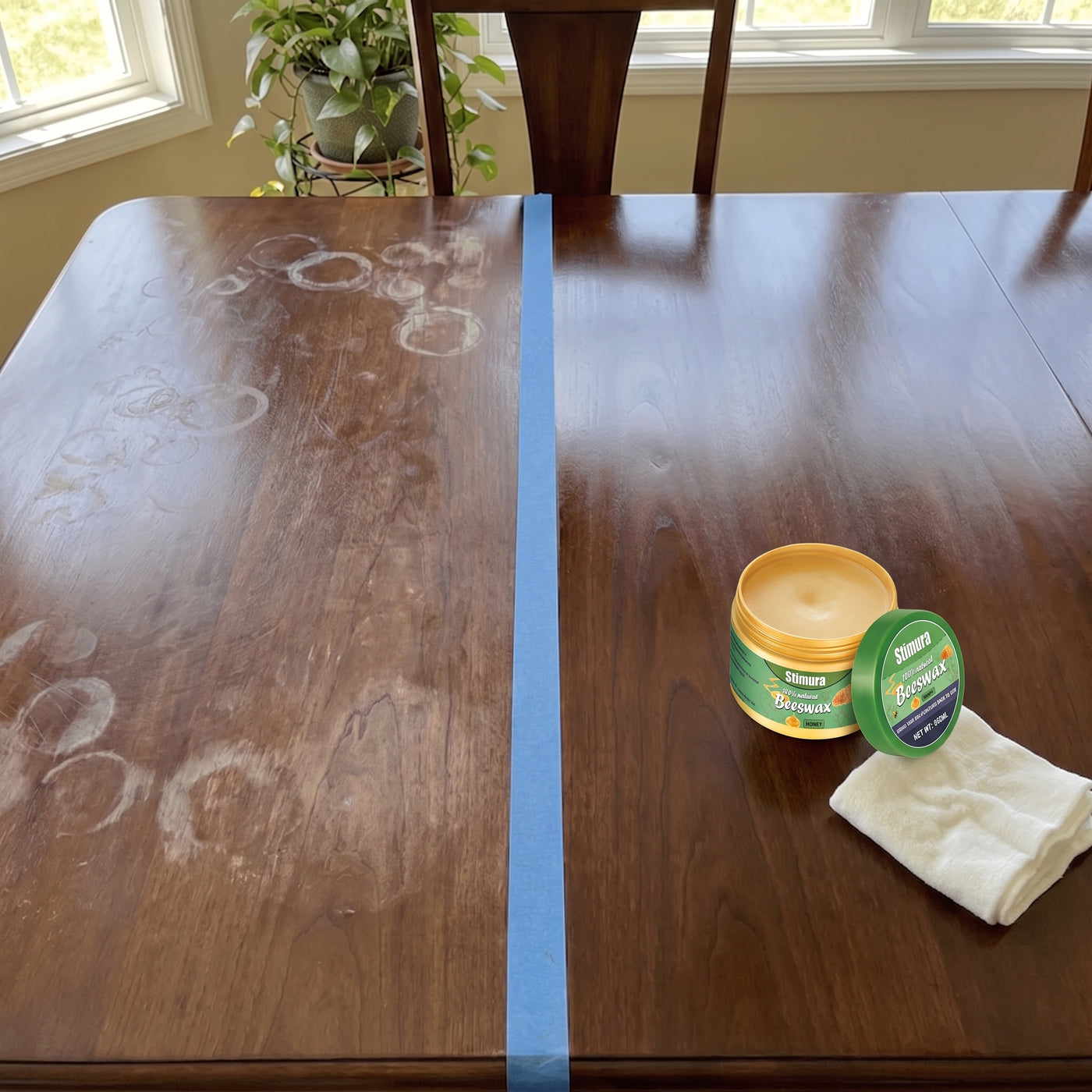
What I’d already wasted money on
Like most people, I reached for the cheap fixes first, and every one let me down:
Touch-up markers and color pencils laid pigment over the scratch — fine from one angle, obvious from the next, and now the wrong shade of brown as well. Old English looked brilliant for two days, then the oil evaporated and the line came straight back. Wax filler sticks sat proud of the surface and started collecting grime. The walnut trick worked for about a week. Nothing lasted, and I couldn’t work out why.
The part nobody explains: that white line is air
Here’s what finally made it click. A scratch in finished wood is a tiny groove cut into the clear coat. That groove fills with air, and air reflects light differently to the finish around it. The white line you can’t stop seeing isn’t missing color — it’s air catching the light. That’s why every product that only adds color fails.
Try it yourself in ten seconds: wet your thumb and rub the scratch. It vanishes — then fades back as the water dries. The water displaced the air; when it evaporated, the air returned. That little test is the whole reason the salve works: it does the same thing, but the oil stays and the beeswax seals it in.


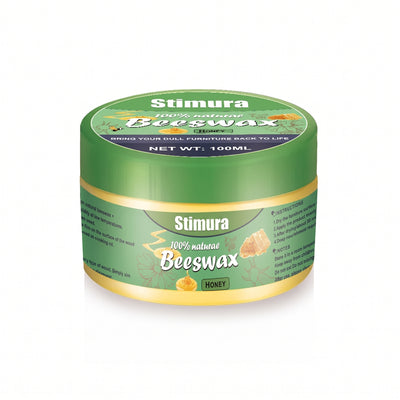
What actually happened when I used it
The process is genuinely four steps: wipe the area clean, rub a small amount of the salve along the scratch with a soft cloth, leave it a couple of minutes, then buff off the excess. No sanding, no color matching, no fumes — it smells like a beeswax candle. The oil sinks into the groove and pushes the air out; the beeswax hardens over the top and seals it. The line stopped catching the light, and unlike the walnut and the Old English, it stayed gone through mopping and daily use.
No dye means it isn’t tied to one wood shade either — the same tin handled oak, and a friend used hers on spotted-gum floors and a dark walnut dresser.
What other people are finding
I’m not the only one — here’s what customers have shared:
So glad I never opened the chalk paint. Tried Murphy's, Pledge, Howard's, even bought the chalk paint. This is the only thing that made the wood look like wood again instead of just shiny for a week.
Josh L · New South Wales
My daughter-in-law asked when we remodeled. 25-year-old kitchen. I did the upper cabinets first as a test because I didn't trust it. My daughter-in-law asked when the remodel happened. The whole kitchen cost me $39.
Theresa M · Sydney
Is it worth it?
The quote I was dreading was in the thousands. Refinishing strips the whole floor to fix a few marks; replacing furniture costs more again. Against that, a tin that quietly fixed every scratch I could find was an easy call.
Free shipping across the US · delivered in 1–2 weeks · 30-day guarantee
Try it on your worst scratch, risk-free
30-day money-back guarantee. Use it on the mark that’s bothered you longest. If it doesn’t disappear, contact them for a full refund — you’ve already seen the mechanism work with your own thumb.