For owners of hardwood floors & furniture
Before You Pay $5,000 to Refinish Your Floors, Try Rubbing the Scratch With a Wet Thumb
There's a 10-second test that reveals what a scratch on finished wood actually is — and why almost every "fix" sold in hardware stores can't work.
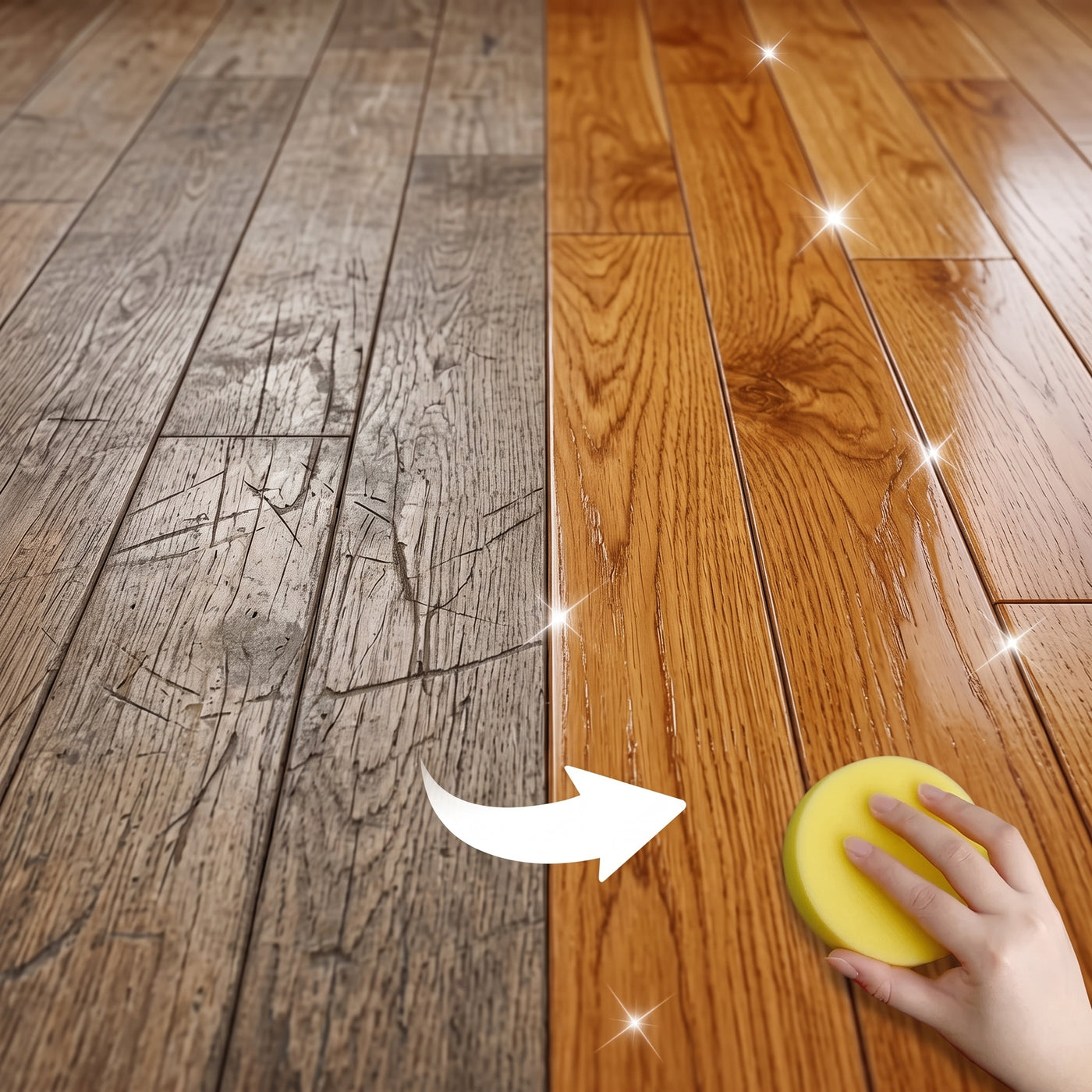
It usually happens the same way. A chair dragged a couple of feet. A dog doing a U-turn on the floorboards. A toy driven across the coffee table your parents gave you.
And now there's a white line across the wood that your eye finds every single time you walk into the room.
Ask a flooring company what to do about it and you'll get one answer: sand and refinish. In the US that typically starts around $3,000 for an average living area — plus moving the furniture out, plus days of dust, plus the smell.
For one scratch. Maybe a handful.
So most people do what you've probably done: head to the hardware store and try the cheap fixes first. Here's why none of them worked.
Why every "scratch fix" you've tried has failed
- Color pencils and touch-up markers. They lay pigment over the top of the scratch. Look at it from one angle, it's gone. Move a step to the left and the light catches it again — often worse, because now it's the wrong shade of brown too.
- Old English and "scratch cover" oils. Mostly mineral oil with dye. It looks brilliant for a day or two, then the oil evaporates and the scratch is back. You end up re-applying forever.
- Wax filler sticks. These bridge over the groove rather than filling it properly. The soft wax sits proud of the surface, grabs dust and dirt, and turns the scratch into a grey line instead of a white one.
- The walnut trick. Rubbing a walnut over the scratch genuinely does something — for about a week. It's just nut oil, and oil alone doesn't stay put. (Keep this thought. It matters in a minute.)
These products all fail for the same reason. They're all trying to fix the color of the scratch.
But a scratch on finished wood isn't a color problem.
That white line isn't wood. It's air.
Here's what actually happened when your floor got scratched. Something hard cut a tiny groove into the finish — the clear coating over the wood. The wood underneath is usually fine.
The groove immediately filled with the only thing available: air.
Air bends and reflects light completely differently to the clear finish around it. That's the whole story. The white line you can't stop looking at is not damaged wood, not missing color — it's a thin channel of air catching the light.
Which is why pigment on top does nothing. You can't color in air.
Don't take our word for it — do this right now
If you're near the scratch, this takes ten seconds:
- Wet your thumb.
- Rub it along the scratch.
- Watch.
The scratch will disappear — completely — for about ten seconds. Then, as the water evaporates, it fades back in, right in front of you.
What you just saw: the water pushed the air out of the groove. Water bends light almost the same way the finish does, so with the air gone, there was nothing for your eye to catch. When the water dried, the air moved back in — and so did the scratch.
You didn't change the color of anything. You displaced air. That's the entire problem, demonstrated on your own floor with your own thumb.
So the fix is obvious: get the air out, and keep it out
Water works for ten seconds because it evaporates. Walnut oil works for a week because it slowly dries and rubs away. The fix that lasts needs two things:
1. An oil that penetrates the groove and displaces the air — exactly like the water did, but without evaporating.
2. A wax that seals the groove behind it — so the oil stays put and the air can't move back in.
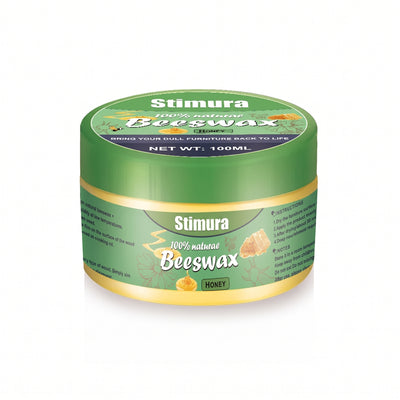
That's what our salve is. A blend of penetrating oils carried in beeswax, in a tin. Here's what that means in practice.
1. It fixes the scratch itself — not the color of it
Because it isn't pigment, there's nothing to match. No choosing between six wrong shades of brown at the hardware store. The oil displaces the air in the groove, and with the air gone, light passes through the way it does everywhere else on the surface.
- Chair-drag scratches on floorboards
- Dog claw marks on hardwood
- Key and plate scuffs on tabletops
- Toy-car damage on the coffee table
It works on any shade of wood — oak, maple, cherry, hickory, walnut furniture — because it isn't painting anything. It's doing what your wet thumb did, permanently.
2. The beeswax is why it lasts
This is the part every oil-based "fix" is missing. Old English, the walnut, orange oil — they all displace the air briefly, then evaporate or wipe away, and the air moves straight back in.
In our salve, the oil goes in first and the beeswax hardens over the groove behind it, sealing it shut. Mopping, wiping down the table, general daily life — the fix stays put, because the air physically can't get back into the groove.
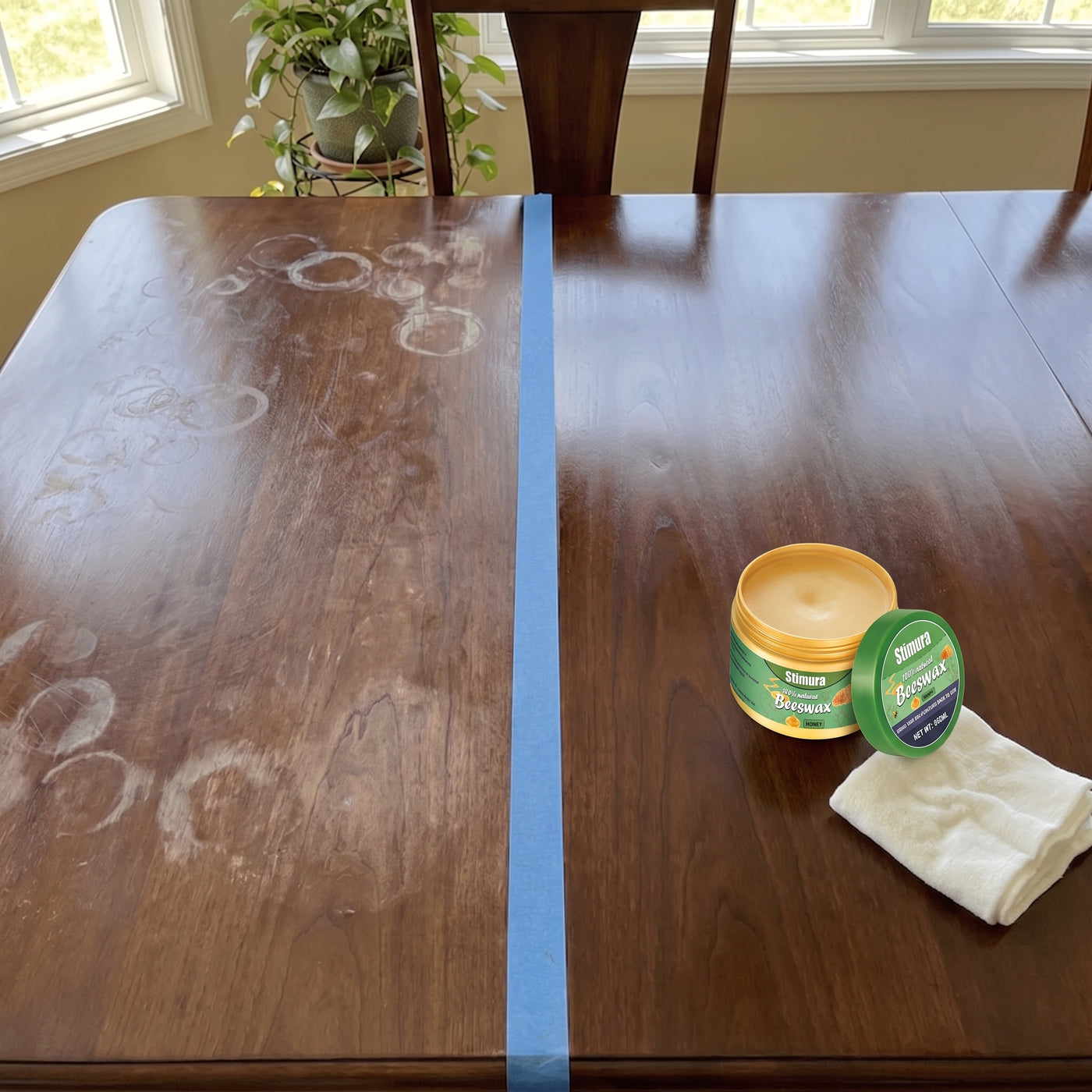
3. It takes minutes, not days
- Clean. Wipe the area with a dry cloth.
- Apply. Rub a small amount along the scratch with a soft cloth. A little goes a long way.
- Wait. Give the oil a few minutes to penetrate the groove.
- Buff. Wipe off the excess. Done.
No sanding. No stripping. No moving the furniture out of the house. No contractor.
4. Simple, natural ingredients
Beeswax and penetrating plant oils. No solvents, no dye, no fumes — nothing you'd worry about on the dining table where your family eats, or on floors where kids and pets live. It smells like a beeswax candle, not a chemical aisle.
5. One tin covers the whole house
A small amount treats each scratch, so one tin does dozens of repairs. Most people go over their whole floor and every piece of wood furniture in the house the first weekend they have it — because once you know the wet-thumb trick, you start finding scratches everywhere.
The math that matters
See it for yourself — drag the slider


Most customers take the two-pack — one for the floors, one that ends up living with the furniture polish.
Get the Salve — Two-Pack $44.97 USD →Free shipping across the US · delivered in 1–2 weeks
Try it on your worst scratch, risk-free
30-day money-back guarantee. Use it on the scratch that's been bothering you the longest. If it doesn't make it disappear, contact us and we'll refund you in full.
You've already seen the mechanism work with your own thumb. The salve just makes it permanent.
P.S. — If you skimmed to the bottom: a scratch on finished wood is a groove filled with air, and air is what your eye sees. Wet your thumb, rub the scratch, and watch it vanish for ten seconds. That's the whole mechanism. Our salve does the same thing with oil instead of water, and seals it with beeswax so it never comes back. Try it here.